


Some error occured while loading the Quick View. Please close the Quick View and try reloading the page.
Every user knows the importance of the “@” symbol in internet communication. Though the symbol barely existed in Latin America before the emergence of email, Spanish-speaking feminist activists immediately claimed it to replace the awkward “o/a” used to indicate both genders in written text, discovering embedded in the internet an answer to the challenge of symbolic inclusion. In repurposing the symbol, they changed its meaning.
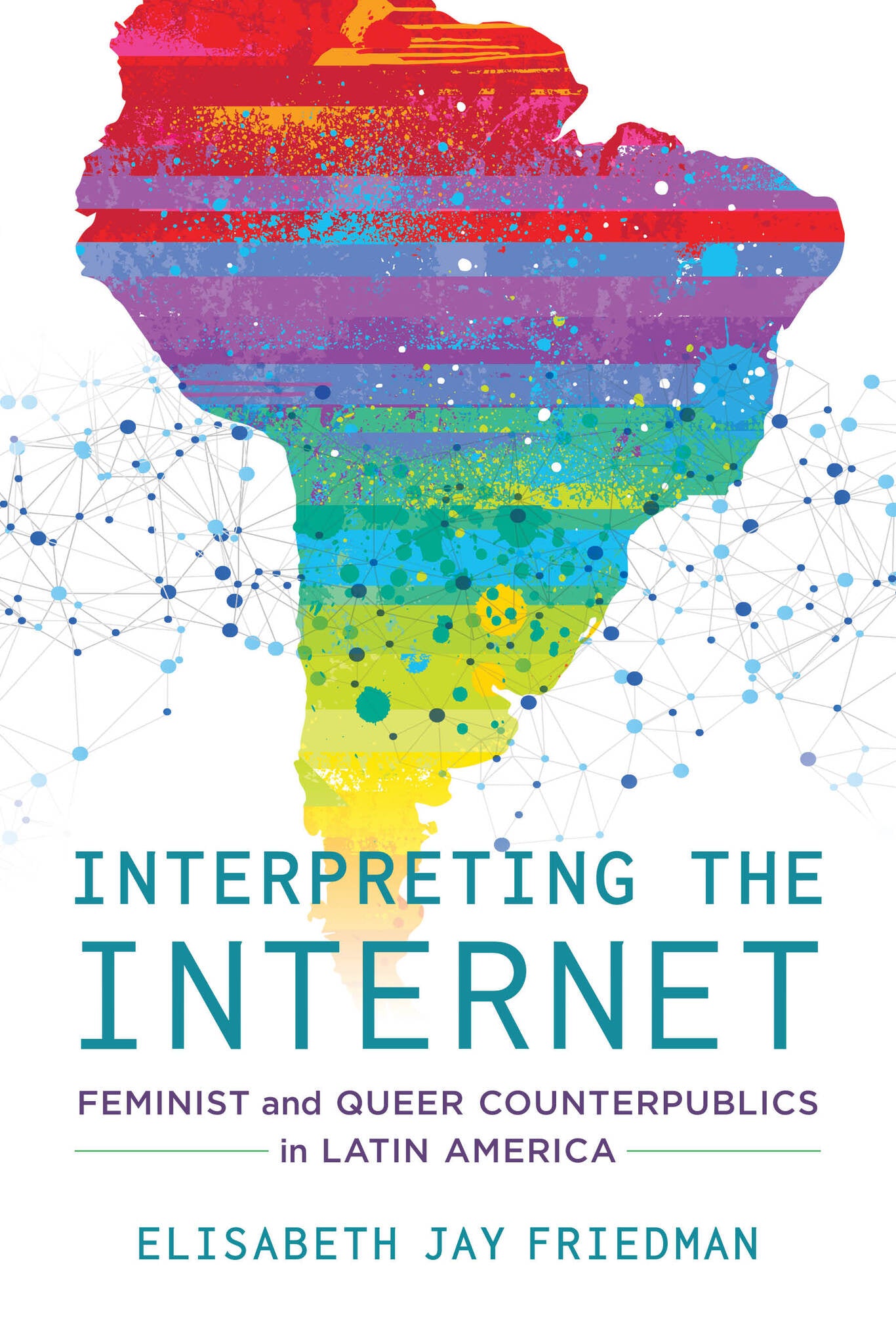
In Interpreting the Internet, Elisabeth Jay Friedman provides the first in-depth exploration of how Latin American feminist and queer activists have interpreted the internet to support their counterpublics. Aided by a global network of women and men dedicated to establishing an accessible internet, activists have developed identities, constructed communities, and honed strategies for social change. And by translating the internet into their own vernacular, they have transformed the technology itself. This book will be of interest to scholars and students in feminist and gender studies, Latin American studies, media studies, and political science, as well as anyone curious about the ways in which the internet shapes our lives.
In Interpreting the Internet, Elisabeth Jay Friedman provides the first in-depth exploration of how Latin American feminist and queer activists have interpreted the internet to support their counterpublics. Aided by a global network of women and men dedicated to establishing an accessible internet, activists have developed identities, constructed communities, and honed strategies for social change. And by translating the internet into their own vernacular, they have transformed the technology itself. This book will be of interest to scholars and students in feminist and gender studies, Latin American studies, media studies, and political science, as well as anyone curious about the ways in which the internet shapes our lives.

Price: $29.95
Pages: 248
Publisher: University of California Press
Imprint: University of California Press
Publication Date:
13 December 2016
Trim Size: 9.00 X 6.00 in
ISBN: 9780520284517
Format: Paperback
BISACs:
"A grounded and well thought-out book. It is essential reading to anyone new to feminist counterpublics in Latin America, and I suspect to many feminist activists who may want to contextualise the work they do online."
Elisabeth Jay Friedman is Chair and Professor of Politics and Professor of Latin American Studies at the University of San Francisco. She is the author of Unfinished Transitions: Women and the Gendered Development of Democracy in Venezuela, 1936–1996 and the coauthor of Sovereignty, Democracy, and Global Civil Society: State-Society Relations at UN World Conferences.
List of Illustrations
Acknowledgments
Introduction. Interpreting the Internet: A Feminist Sociomaterial Approach
1. Conceiving Latin American Feminist Counterpublics
2. The Creation of “a Modern Weaving Machine”: Bringing Feminist Counterpublics Online
3. Weaving the “Invisible Web”: Counterpublic Organizations Interpret the Internet
4. La Red Informativa de Mujeres de Argentina: Constructing a Counterpublic
5. From Privacy to Lesbian Visibility: Latin American Lesbian Feminist Internet Practices
Conclusion. Making the Internet Make Sense
Notes
Bibliography
Index
Acknowledgments
Introduction. Interpreting the Internet: A Feminist Sociomaterial Approach
1. Conceiving Latin American Feminist Counterpublics
2. The Creation of “a Modern Weaving Machine”: Bringing Feminist Counterpublics Online
3. Weaving the “Invisible Web”: Counterpublic Organizations Interpret the Internet
4. La Red Informativa de Mujeres de Argentina: Constructing a Counterpublic
5. From Privacy to Lesbian Visibility: Latin American Lesbian Feminist Internet Practices
Conclusion. Making the Internet Make Sense
Notes
Bibliography
Index